
Case Management: Managing complex litigation becomes increasingly difficult as cases grow in size, scope, and complexity.
Legal teams may need to coordinate large volumes of documents, multiple attorneys, strict court deadlines, discovery obligations, expert input, and ongoing client communication at the same time.
Without organized systems and clear workflows, teams can face document control problems, communication gaps, missed deadlines, duplicated work, and inefficient collaboration.
Understanding these challenges can help law firms and legal departments build more reliable and efficient litigation processes.
What Makes Complex Litigation Difficult to Manage?
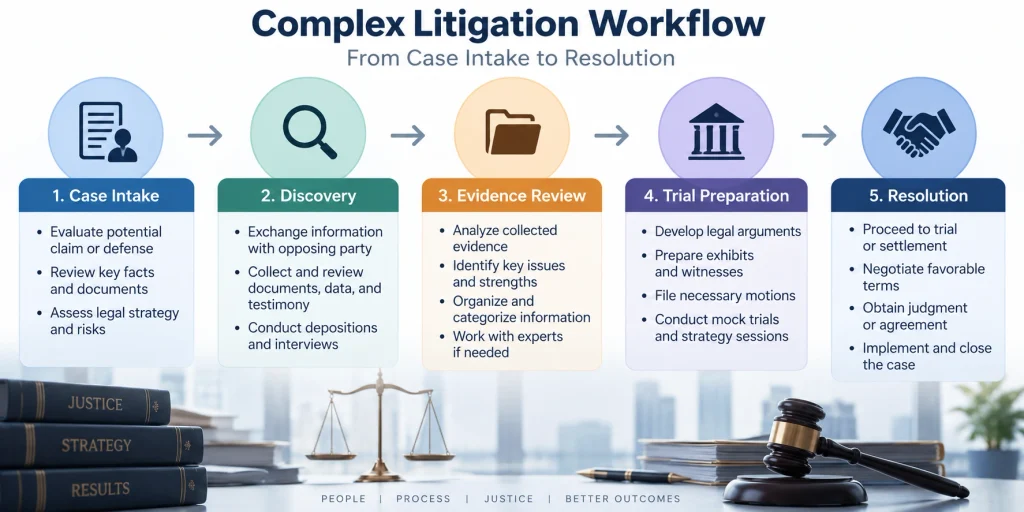
Complex litigation often involves several factors that increase operational difficulty, including:
- Large volumes of documents and evidence
- Multiple attorneys and stakeholders
- Numerous deadlines and court requirements
- Extensive discovery processes
- Expert analysis and outside consultants
- Cross-jurisdictional coordination
- Increased client reporting needs
Unlike smaller matters, complex cases require legal teams to manage many moving parts at the same time. Even a minor breakdown in organization or communication can affect preparation, timelines, and decision-making.
Key Case Management Challenges in Complex Litigation
1. Managing Large Volumes of Case Information
One of the most significant challenges in complex litigation is controlling large amounts of information.
A single case may include:
- Contracts
- Emails
- Digital records
- Financial documents
- Expert reports
- Depositions
- Court filings
- Evidence files
As the amount of information increases, legal teams need reliable ways to locate, review, organize, and update relevant materials.
Poor information management can lead to:
- Duplicate documents
- Difficulty locating important evidence
- Confusion over document versions
- Inconsistent file organization
- Time wasted searching for information
Clear naming conventions, structured storage systems, version control, and consistent document-handling procedures can help reduce these problems.
2. Coordinating Multiple Legal Team Members
Complex cases are rarely handled by one person. They may involve:
- Lead counsel
- Associate attorneys
- Paralegals
- Litigation support professionals
- External consultants
- Experts
- Client representatives
When responsibilities are unclear, tasks may be delayed, duplicated, or overlooked.
Legal teams benefit from workflows that clearly identify:
- Who owns each task
- Which deadlines are approaching
- What information each person needs
- Who is responsible for reviews and approvals
- How updates should be communicated
Clear task ownership and centralized communication can help keep everyone aligned throughout the case.
3. Tracking Deadlines and Court Requirements
Litigation involves strict procedural requirements, and missing an important deadline can create serious complications.
Common deadlines may include:
- Filing dates
- Discovery deadlines
- Deposition schedules
- Hearing dates
- Response periods
- Expert disclosure deadlines
- Court-ordered milestones
Managing these dates across separate spreadsheets, email threads, and personal calendars becomes increasingly difficult as a case expands.
A structured case management process can help legal teams monitor deadlines, assign responsibility, and reduce the risk of administrative errors.
4. Handling Complex Discovery Processes
Discovery is often one of the most demanding parts of complex litigation.
Legal teams may need to:
- Collect relevant information
- Review large datasets
- Identify key evidence
- Respond to discovery requests
- Organize documents for production
- Prepare materials for disclosure
The process becomes even more complicated when electronically stored information, or ESI, is involved.
Digital records may exist across:
- Email systems
- Cloud platforms
- Company servers
- Mobile devices
- Collaboration tools
- Archived databases
Effective discovery management requires clear procedures, consistent review methods, careful documentation, and appropriate technology.
5. Maintaining Secure Communication
Confidentiality is a central concern in legal work.
During complex litigation, teams frequently exchange sensitive information related to:
- Client communications
- Legal strategy
- Business records
- Financial information
- Confidential evidence
- Expert analysis
Unorganized communication channels can increase the risk of information being shared with the wrong person, important discussions being lost, or team members working from outdated information.
Legal teams should use secure communication methods and establish clear procedures for handling confidential material.
6. Balancing Technology With Human Decision-Making
Technology plays an increasingly important role in modern litigation management.
Legal software can help teams with:
- Document organization
- Deadline tracking
- Workflow management
- Collaboration
- Reporting
- Search and retrieval
However, technology does not replace legal judgment.
Attorneys and legal professionals still need to evaluate facts, interpret evidence, assess risks, communicate with clients, and develop case strategies.
The most effective approach usually combines practical technology with experienced professional oversight.
7. Managing Client Expectations
Complex cases may continue for months or even years, which makes client communication especially important.
Clients may expect regular updates regarding:
- Case developments
- Upcoming milestones
- Strategic decisions
- Costs
- Risks
- Potential challenges
Without a consistent reporting process, clients may receive incomplete or conflicting information.
Regular, structured communication can improve transparency and help clients better understand the progress of their case.
How Legal Teams Can Improve Case Management

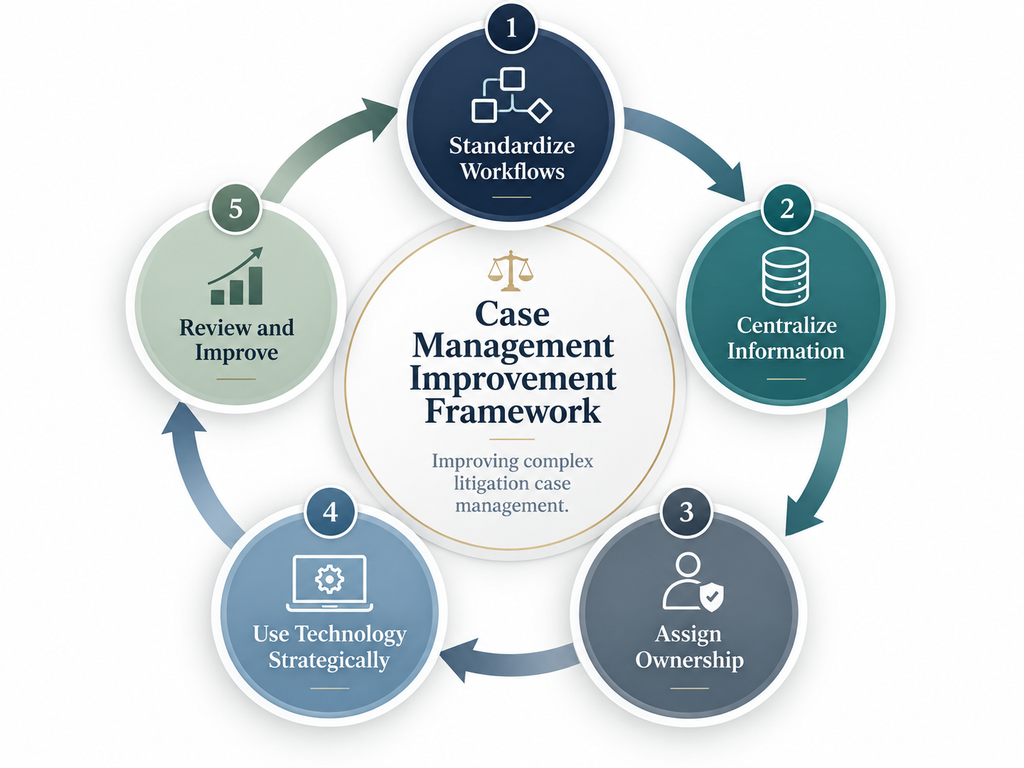
Improving complex litigation management usually requires a combination of better processes, clearer responsibilities, and appropriate technology.
Create Standardized Workflows
Standardized procedures help teams manage recurring tasks consistently.
Examples include:
- Document organization standards
- Task assignment procedures
- Review checklists
- Filing procedures
- Communication guidelines
- Approval processes
Clear workflows can reduce confusion and make it easier for new team members to understand how the case is being managed.
Centralize Important Case Information
Keeping important case information in one organized system can reduce duplication and improve access.
A centralized approach may help teams manage:
- Documents
- Deadlines
- Task assignments
- Case notes
- Communications
- Status updates
This can reduce reliance on scattered email threads, separate spreadsheets, and individual memory.
Use Technology Strategically
Legal technology should support the team’s workflow rather than create unnecessary complexity.
Useful capabilities may include:
- Document management
- Deadline tracking
- Collaboration tools
- Reporting dashboards
- Search functions
- Workflow automation
The right technology will depend on the size of the case, the number of people involved, and the needs of the legal team.
Improve Knowledge Sharing
Complex litigation often involves information held by different people across the team.
Important case knowledge should be documented and made accessible to authorized team members.
This can improve continuity, reduce dependency on individual team members, and make it easier for the team to respond when responsibilities change.
Review Case Management Processes Regularly
Litigation needs can change as a case progresses.
A process that works during early investigation may not be sufficient during discovery, expert review, trial preparation, or settlement discussions.
Periodic reviews can help teams identify:
- Workflow gaps
- Communication problems
- Unclear responsibilities
- Outdated procedures
- Technology limitations
Making adjustments throughout the case can help maintain efficiency as the matter evolves.
The Role of Technology in Complex Litigation
Technology can help legal teams manage the growing volume of information involved in modern litigation.
Depending on the case, technology may support:
- Electronic document review
- Case organization
- Evidence management
- Team collaboration
- Deadline tracking
- Client reporting
- Research
- Workflow automation
Artificial intelligence and automation tools may also assist with certain administrative, search, organization, and review tasks.
However, legal teams must consider confidentiality, accuracy, professional responsibility, data security, and applicable ethical requirements when adopting new tools.
Technology is most effective when it supports well-designed legal processes rather than replacing them.
The Future of Case Management in Complex Litigation
As litigation continues to involve larger volumes of digital information, case management practices will likely continue to evolve.
Future approaches may place greater emphasis on:
- Integrated legal workflows
- Centralized information systems
- Better collaboration tools
- Improved document search
- Data-driven reporting
- Automation of routine administrative tasks
- Responsible use of artificial intelligence
At the same time, human judgment will remain essential for legal analysis, strategy, advocacy, and decision-making.
The goal of better case management is not simply to use more technology. It is to help legal teams work more accurately, securely, and efficiently.
Final Thoughts
Complex litigation creates significant case management challenges because legal teams must coordinate large amounts of information, people, deadlines, evidence, and communication.
Strong litigation management depends on clear organization, defined responsibilities, secure communication, standardized workflows, and carefully selected technology.
By reducing administrative friction and improving access to important information, legal teams can spend more time focusing on legal analysis, strategy, and client needs.
FAQ’s
What is complex litigation case management?
It is the process of organizing documents, deadlines, team members, evidence, and communication in large or complicated legal cases.
What are the biggest challenges in complex litigation?
Common challenges include managing large amounts of information, tracking deadlines, coordinating teams, handling discovery, and maintaining secure communication.
Why is document management important in litigation?
Good document management helps legal teams find important information quickly, avoid duplicates, and keep updated versions organized.
How can legal teams avoid missing deadlines?
Teams can use centralized calendars, task tracking systems, and clear responsibility assignments to monitor important court and filing dates.
What role does technology play in litigation management?
Technology can help with document organization, deadline tracking, collaboration, reporting, search, and workflow automation.
Can AI be used in complex litigation?
AI may assist with search, review, organization, and routine tasks, but legal professionals still need to oversee accuracy, confidentiality, and decision-making.
How can legal teams improve communication?
Clear reporting procedures, secure communication tools, and defined responsibilities can help teams share information more consistently.
Why is client communication important in complex cases?
Regular updates help clients understand case progress, upcoming decisions, risks, costs, and important developments.
Disclaimer: This article is provided for general informational purposes only and does not constitute legal advice.